Acronis has spent the past year moving artificial intelligence from a helpful add-on to the centre of its cyber protection platform. From the July 2026 “Acronis Accelerate” announcements to the launch of GenAI Protection and a steady stream of AI features across security, patching and automation, the direction is clear: the platform is becoming AI-native. For a South African managed service provider (MSP), the question is less about the technology itself and more about what it changes in the day-to-day work of protecting clients — and how to adopt it responsibly.
At Soteria Cloud we deliver cyber resilience services powered by Acronis Cyber Protect Cloud, hosted locally and billed in Rands. Here is our read on the recent AI developments, what they mean in practice, and how MSPs can put them to work without losing sight of the fundamentals.
From AI assistance to autonomous operations
At its Acronis Accelerate event in July 2026, Acronis set out a strategy it describes as “By AI, With AI, For AI” — a shift from AI that assists a technician to AI that can execute defined workflows on its own. Several new building blocks were announced as part of a more unified platform, including:
- Acronis Cyber Console — a single workspace bringing protection, management, automation and infrastructure together for technicians (and, increasingly, AI agents).
- Acronis Cyber Intelligence — an analytics layer intended to surface service gaps and operational insight across endpoints and clients.
- Acronis Service Desk — autonomous ticket workflows that use AI to enrich, analyse and help remediate alerts, aiming to reduce alert overload.
- Acronis Cyber Studio — a space for building deterministic and agentic workflows using natural-language prompts.
The theme running through all of it is operational leverage: helping a lean MSP team handle more clients and more alerts without a matching increase in headcount.
The developments that matter most to MSPs
Acronis Copilot for investigation and remediation
Acronis Copilot is a generative AI assistant that lets an administrator work through incidents in plain language. According to Acronis, it can summarise and contextualise an incident, suggest remediation actions — such as isolating a machine, adding a file to a blocklist or patching a workload — and help execute them quickly. For a technician triaging a busy queue, that can mean less time reconstructing what happened and more time acting on it.
AI triage for EDR incidents
Acronis has added AI triage that produces structured summaries of endpoint detection and response (EDR) incidents, including the relevant MITRE ATT&CK techniques and suggested remediation steps. The practical benefit is that a first-line technician can understand an attack chain from start to finish, and prioritise genuinely high-risk incidents rather than working through a flat list of generic alerts.
GenAI Protection for the shadow-AI problem
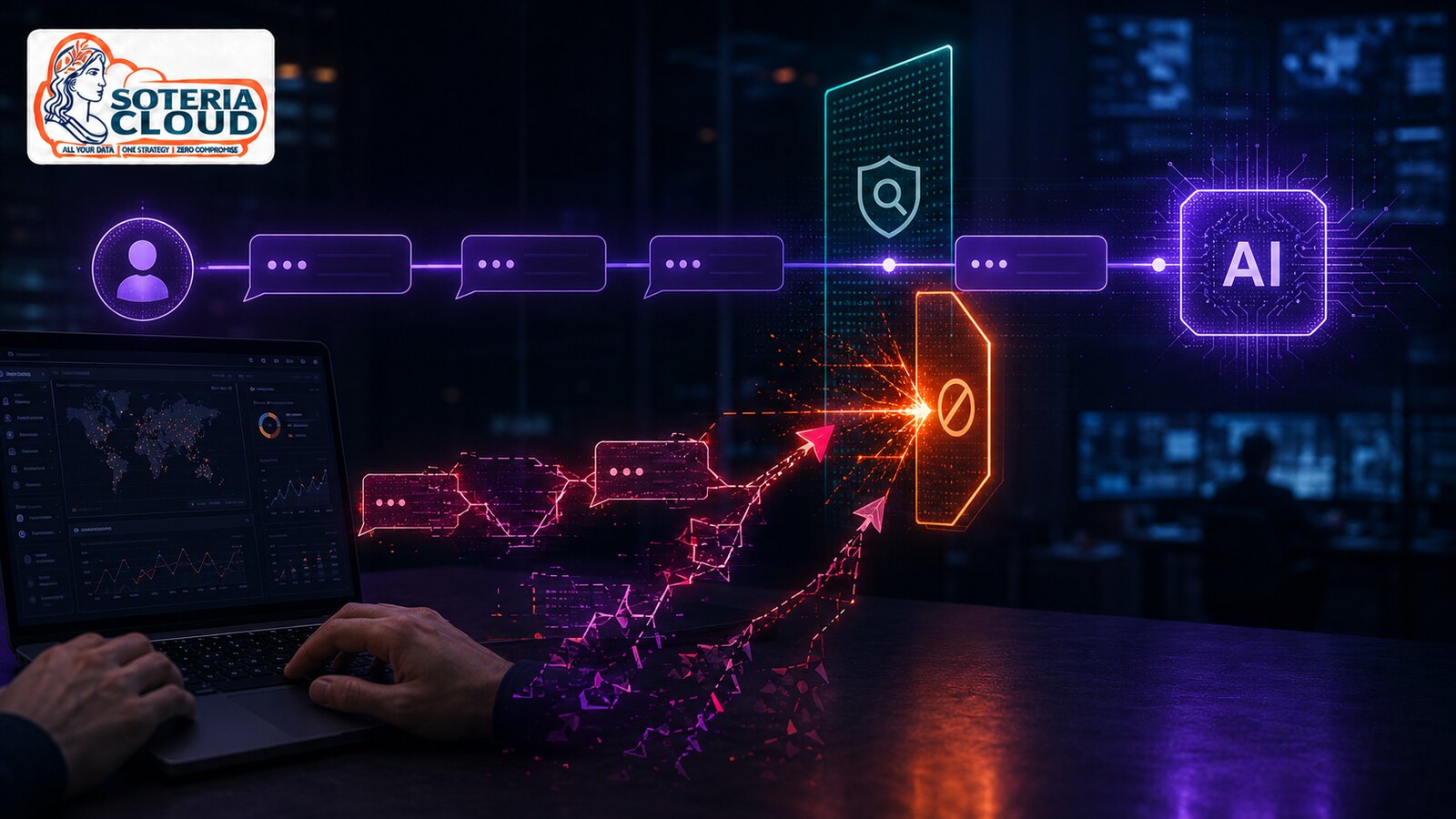
Launched in April 2026, Acronis GenAI Protection is aimed squarely at a risk that has grown quickly in South African workplaces: staff using public AI tools without oversight. Acronis describes capabilities including visibility into unsanctioned (“shadow”) AI usage, inspection of prompts to help prevent sensitive data — such as personal or financial information — from leaking into public models, and detection of malicious prompts. For MSPs, this is a way to help clients govern AI usage without bolting on yet another point product.
Smarter patching and deployment in RMM
On the remote monitoring and management (RMM) side, Acronis has introduced AI-based patch stability scoring, which categorises patches by risk before they are deployed, and “DeployPilot”, which uses AI to generate install and uninstall commands and package metadata. Both are designed to reduce the manual effort and the risk of downtime that come with large-scale patching across many client environments.
AI reaching consumer products too
The AI push is not limited to the MSP platform. Acronis True Image 2026, released in late 2025, added AI-based threat detection alongside built-in patch management for individual users — a useful signal of how central AI-driven security has become across the Acronis range.
Reading it through the five pillars of resilience
New features are only useful if they improve outcomes. We map them against the five pillars we use with partners:
- Prevention — AI-based patch stability scoring and GenAI governance help close gaps and reduce risky behaviour before an incident starts.
- Detection and response — Copilot and AI triage help teams understand and act on EDR/XDR incidents faster, with clearer context.
- Recoverability — because detection and backup sit on one platform, a confirmed threat can be met with an attack-specific rollback rather than a slow, manual rebuild.
- Operational stability — autonomous ticket workflows and workflow automation take repetitive load off technicians, which supports more consistent service delivery.
- Ownership — crucially, the MSP stays in control of the client relationship and the decisions; AI accelerates the work, it does not take over accountability.
The South African context
Adopting AI-driven protection raises fair questions about where data goes and how it is governed. Two points matter locally. First, capabilities such as GenAI Protection are designed to help keep sensitive information out of public AI models — directly relevant to POPIA-aligned handling of personal data. Second, running these services on South African data centre infrastructure, including Teraco in Cape Town and Johannesburg, supports POPIA-aligned data residency and keeps latency low for local clients. Rand-denominated billing supports predictable local budgeting as you scale these services across your customer base.
A sensible note of caution: AI-assisted does not mean unattended. These tools are strongest when an experienced team sets the policies, reviews the automation and keeps human judgement in the loop for anything consequential.
How Soteria Cloud helps you adopt this
Our role is to help South African MSPs turn these platform capabilities into services they can sell and operate with confidence. That means practical enablement — helping you understand which AI features fit your clients, how to configure them, and how to package them — all on locally hosted infrastructure, billed in Rands, with your team owning the customer relationship. Outcome-led, platform-transparent and partner-first.
If you would like to talk through what the latest Acronis AI developments could mean for your client base, talk to our team.
This article summarises publicly announced Acronis developments as of mid-2026 and is provided for general information. Feature availability and naming may change; please confirm current capabilities for your specific plan.